 Dakhilaa
A drop year works when it is a diagnosis-led rebuild, not just "the same year, but harder." The students who jump ranks aren't the ones who study more — they are the ones who fix what actually went wrong last time.
Gains are steady, not sudden
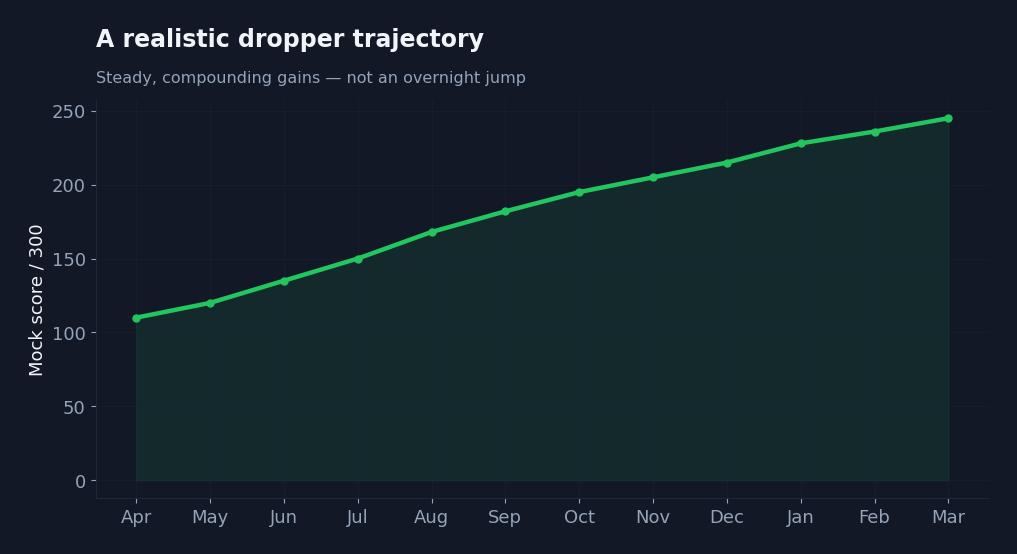
A realistic drop year compounds — it is a climb, not an overnight jump.
Don't expect a 60-to-99 percentile leap in a month. Real improvement looks like the graph above: steady monthly gains that compound into a very different student by February.
Phase the year
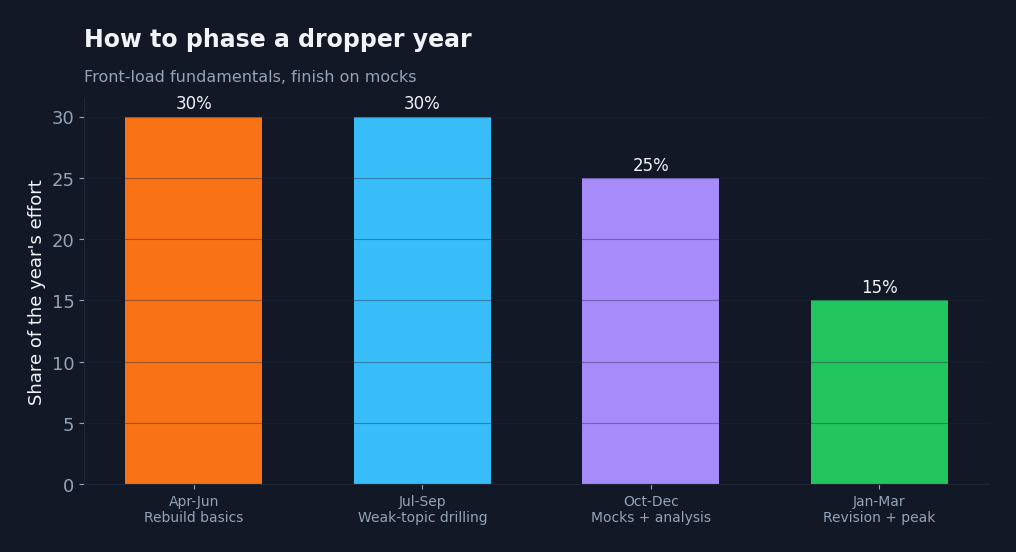
Front-load fundamentals, finish the year on mocks and revision.
- Apr–Jun: rebuild shaky fundamentals — don't skip this.
- Jul–Sep: drill your weak high-weight topics hard.
- Oct–Dec: full mocks with deep analysis.
- Jan–Mar: revision, error-fixing, peaking.
Where your time should go
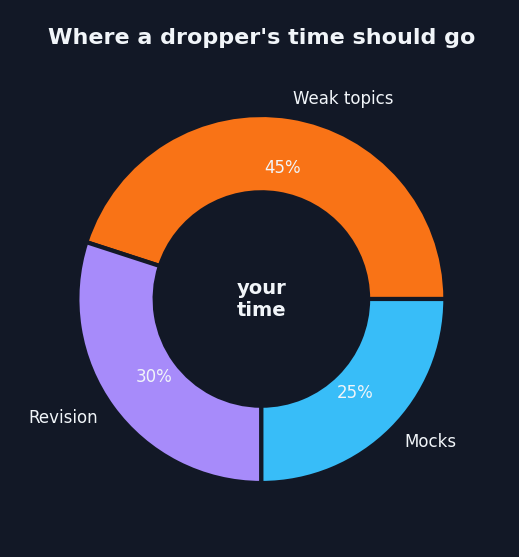
Most of a dropper's time belongs on weak topics — that is where last year's marks were lost.
Last year's result is the most valuable data you have. Study it before you study anything else.
Start the year by being honest about where it went wrong — with data, not memory. Dakhilaa's diagnostic maps exactly which topics cost you marks, so your drop year attacks the real gaps from day one instead of repeating the same blind effort.