 Dakhilaa
Every year students are confused when their marks and percentile don't line up with a friend's. The reason is normalization — and once you get it, the whole percentile system makes sense.
Why normalization exists
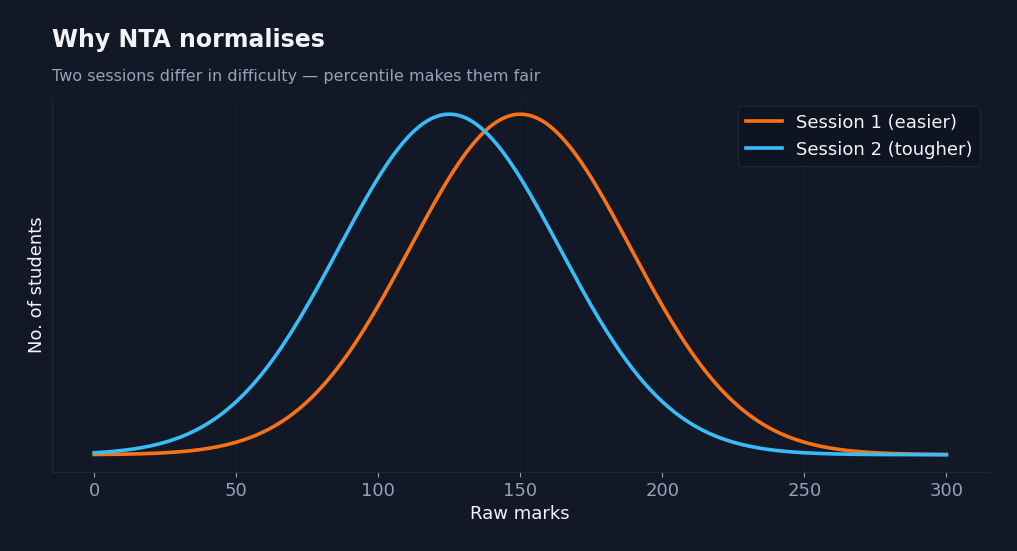
JEE Main runs in multiple sessions on different days, and no two papers are equally hard. Comparing raw marks across an easy and a tough session would be unfair, so NTA converts marks to a percentile within each session.
The formula
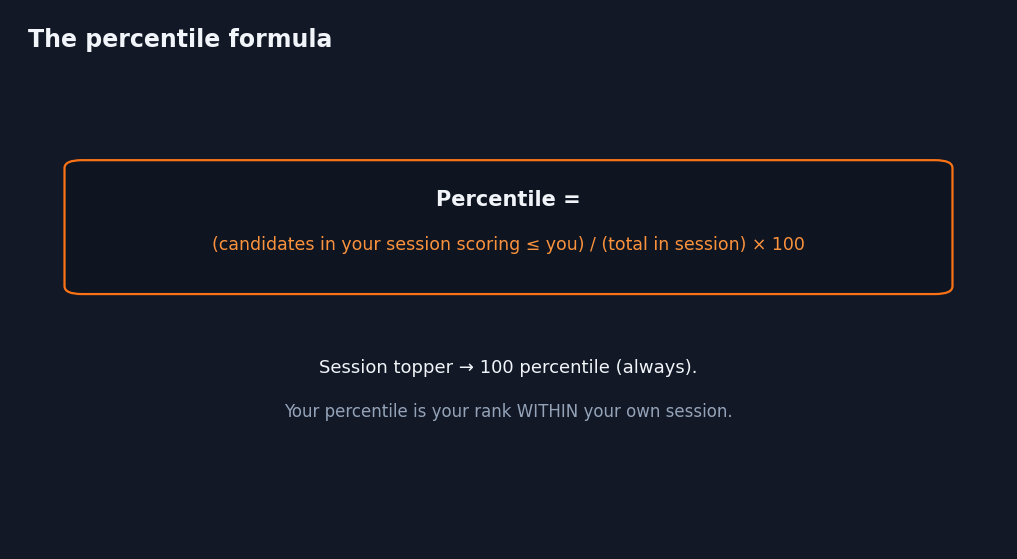
Your percentile is the share of candidates in your session who scored at or below you, times 100. The session topper always gets exactly 100 percentile. So percentile is really your rank within your own session's crowd — not a raw mark.
If you attempt twice
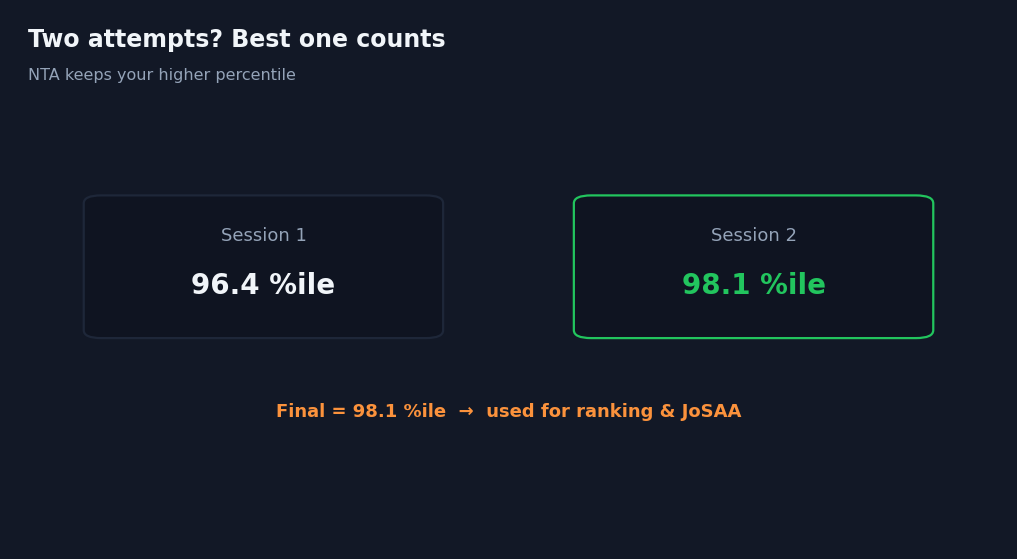
Because your best session counts, two attempts is usually an advantage — you get a second shot at a better paper and a better day.
You cannot control your session's difficulty, but you can control your readiness for any paper. Practising mocks across difficulty levels — like the ones on Dakhilaa, which estimate your percentile on realistic trends — keeps your score stable whichever paper you get.