 Dakhilaa
Students collect books like trophies and read none of them deeply. For JEE Main, a short, well-used shelf beats a tall, untouched one. Here is what actually matters.
NCERT first — especially for Chemistry
NCERT is non-negotiable, and for Chemistry it is practically the exam itself — a large share of Inorganic and Physical questions come straight from its lines. Master NCERT before touching anything thicker.
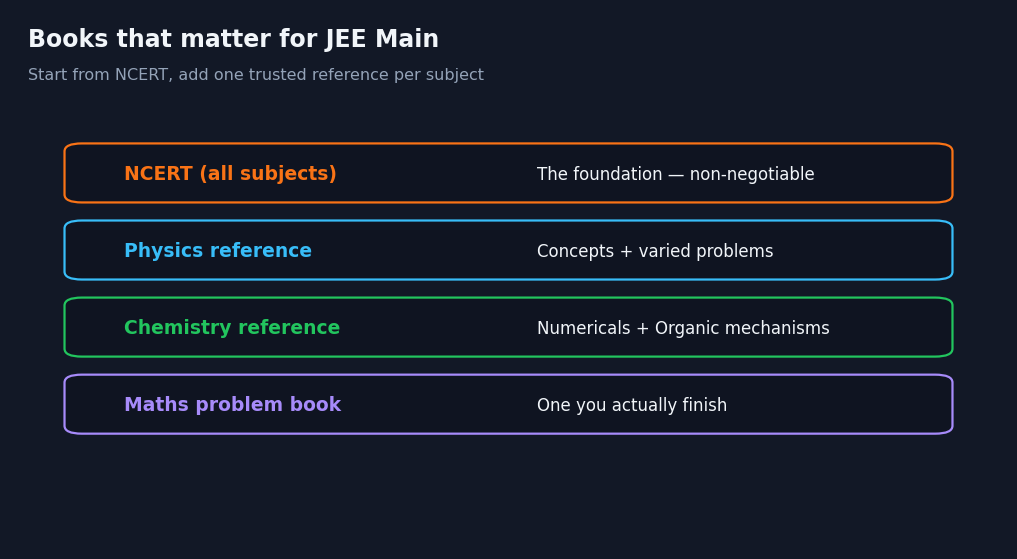
Start from NCERT, then add one trusted reference per subject — not five.
One strong reference per subject
- Physics: NCERT for concepts, then a problem-focused reference for practice.
- Chemistry: NCERT as the base, plus a concise reference for numericals and Organic mechanisms.
- Maths: a single rigorous problem book you actually finish beats three you sample.
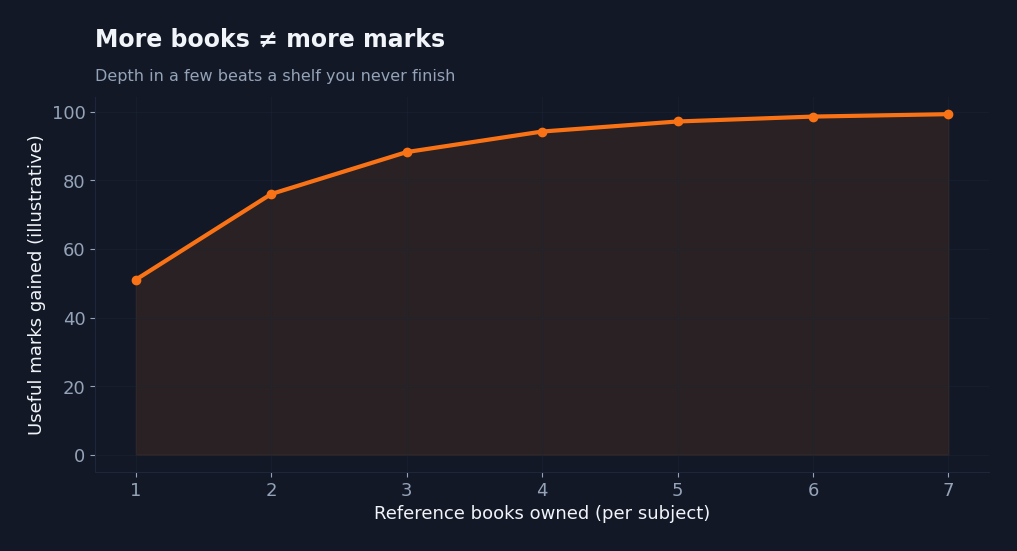
More books do not mean more marks — depth in a few does.
How to actually use a book
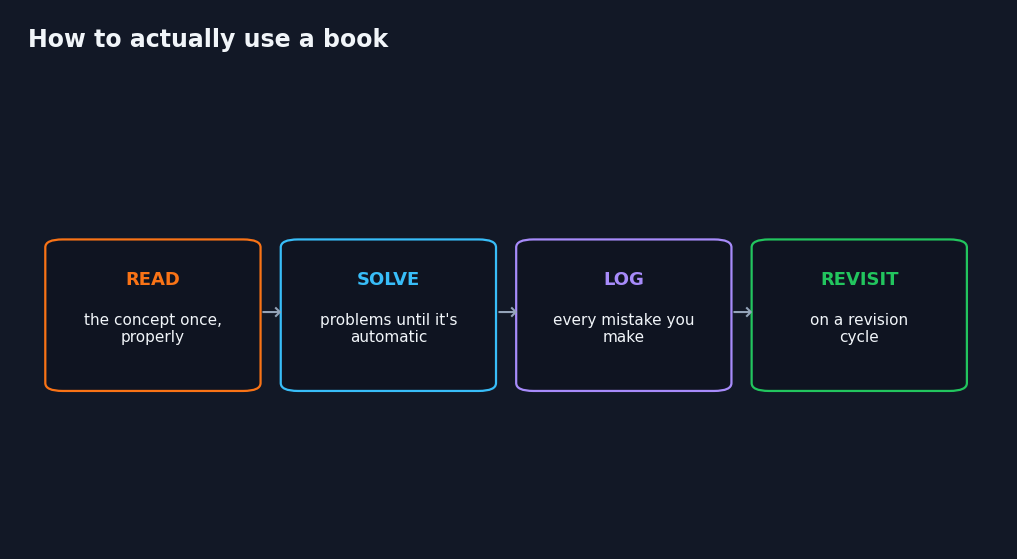
A book only works inside a loop: read, solve, log mistakes, revisit.
A book you finish and revise beats three you start. Depth, not shelf length, is what the exam rewards.
Books teach concepts, but they can't tell you where you are losing marks. Pair them with a quick Dakhilaa diagnostic, and you'll know exactly which chapters to open next — and which to leave.