 Dakhilaa
Before any strategy, you need the rules of the game cold. Here is the JEE Main Paper 1 (B.E./B.Tech) pattern in plain language. One caveat up front: NTA can tweak details year to year, so always confirm against the latest official information bulletin for your session.
The structure
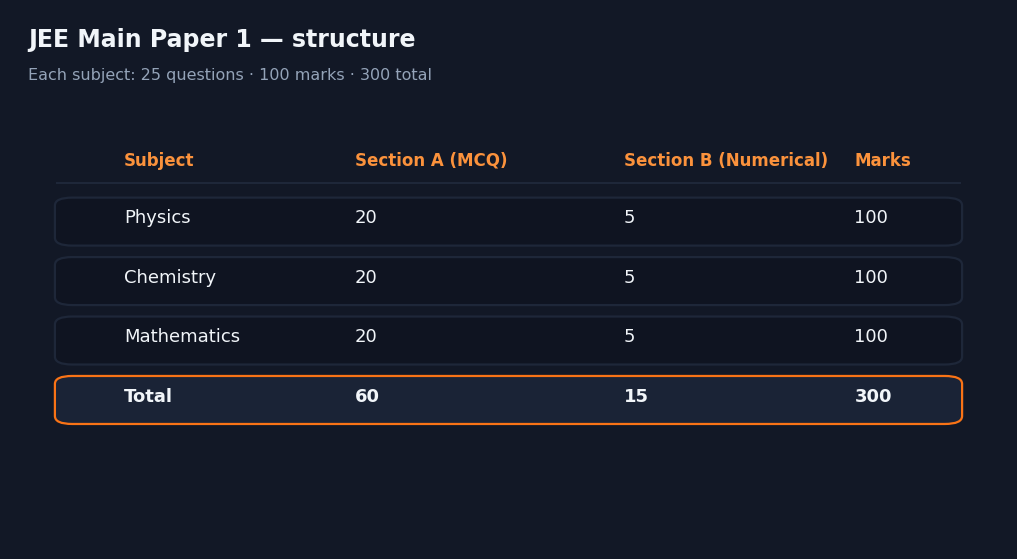
Three subjects — Physics, Chemistry, Mathematics. Each has 25 questions: 20 multiple-choice (Section A) and 5 numerical-value questions (Section B). That is 75 questions, 300 marks, usually in 3 hours.
The marking scheme
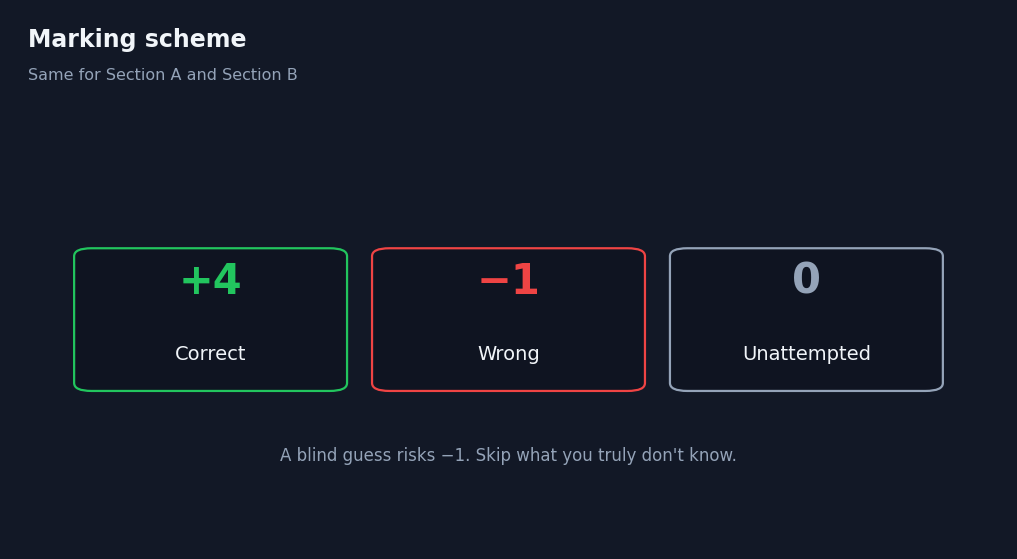
Every correct answer is +4, every wrong answer is −1, and an unattempted question is 0. Negative marking now applies to numerical questions too, so a blind guess is a real risk — skip what you genuinely don't know.
What the pattern tells your strategy
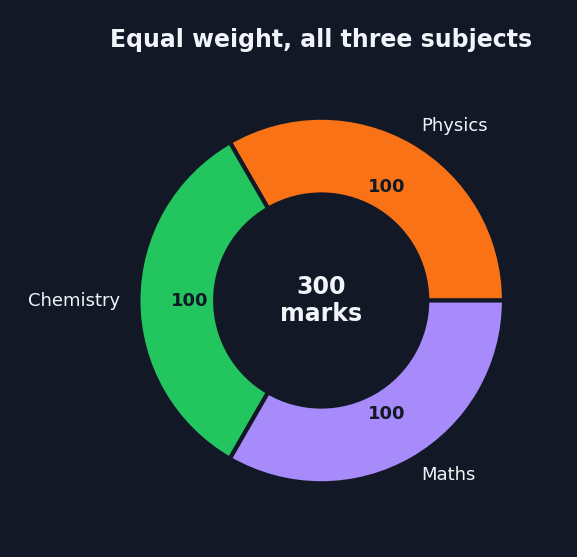
Equal weight across subjects means your weakest subject drags your rank the most. Balance beats brilliance in one area.
Because each subject is worth the same, a lopsided student — brilliant in Maths, weak in Chemistry — loses more than a balanced one. The fastest gains come from lifting your weakest subject, which is exactly what a diagnostic on Dakhilaa helps you pinpoint.